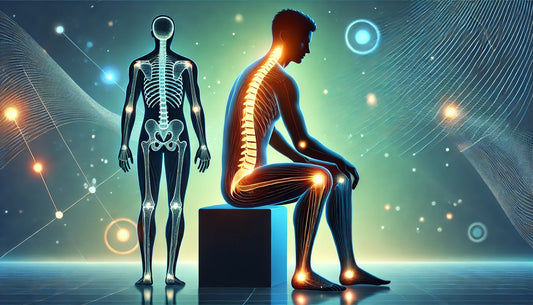

If you've been living with chronic pain for any length of time, you've probably tried more solutions than you can count. Medications that work until they don't. Physical therapy that helps while you're going and fades when you stop. Injections that buy a few months before the pain comes back. And through all of it, a quiet, exhausting question: is there actually something that provides consistent, lasting relief?
Cold laser therapy (also called Low-Level Laser Therapy (LLLT) ) is one of the most clinically validated non-pharmaceutical pain relief approaches available today. And thanks to advances in device technology, it's now accessible at home, without a prescription, in a session that takes about two minutes.
Here's everything you need to know.
What Is Cold Laser Therapy?
Cold laser therapy uses low-intensity light energy to penetrate tissue at the cellular level. Unlike surgical or aesthetic lasers, cold lasers don't generate heat. They deliver specific wavelengths of light that interact with cells in ways that reduce inflammation, improve circulation, and support the body's natural repair processes.
The science behind it is called photobiomodulation. This is the process by which light energy triggers biological responses in cells. When light at the right wavelength reaches damaged or inflamed tissue, it stimulates mitochondrial activity (the energy production process within cells), which accelerates healing and reduces the pain signals being sent to the brain.
Cold laser therapy has been studied extensively in clinical settings for decades and is used by physical therapists, sports medicine practitioners, and rehabilitation specialists worldwide.
What Conditions Does Cold Laser Therapy Help With?
Cold laser therapy has been studied and applied across a wide range of chronic and acute pain conditions. The most common include:
Back pain — one of the most frequently treated conditions with LLLT, including lower back pain, sciatica, and post-surgical back pain. Many users with decades of back pain history find consistent daily relief where other treatments have failed.
Arthritis and joint pain — LLLT reduces joint inflammation and supports cartilage health over time. Both osteoarthritis and rheumatoid arthritis patients have reported meaningful reduction in daily pain with regular use.
Neuropathy — the nerve pain associated with diabetes, chemotherapy side effects, and other conditions responds to microcurrent stimulation in ways that purely physical therapies cannot replicate.
Fibromyalgia — the widespread, diffuse nature of fibromyalgia pain can make traditional treatment difficult. Cold laser therapy allows users to treat multiple areas in targeted sessions, addressing the moving and variable nature of fibromyalgia symptoms.
Neck and shoulder pain — particularly common in desk workers, overhead athletes, and anyone with posture-related pain. The portable, handheld form factor of at-home devices makes neck and shoulder treatment practical in a way that clinical LLLT often isn't.
Sports and overuse injuries — tendinitis, muscle strains, and ligament issues are among the most studied applications of LLLT in sports medicine settings. Professional sports organizations, including Major League Baseball teams, have incorporated cold laser therapy into their recovery protocols.
Post-surgical pain — cold laser therapy is indicated as an adjunctive treatment for post-surgical pain and has been shown to reduce recovery timelines when used consistently following procedures.
What Is Microcurrent Electrical Stimulation and Why Does It Matter?
Most people have heard of TENS (Transcutaneous Electrical Nerve Stimulation) — devices that use electrical impulses to interrupt pain signals. Microcurrent electrical stimulation works on a similar principle but at much lower intensity levels, more closely mimicking the body's own bioelectrical activity.
When delivered at the right frequency, microcurrent stimulation helps calm overactive pain signals, reduce muscle tension, and improve the electrical environment in damaged tissue, creating conditions more favorable to healing.
On its own, both cold laser therapy and microcurrent electrical stimulation have documented benefits. Combined, they produce outcomes that consistently exceed what either delivers alone. This combination effect is the clinical foundation behind LaserTouchOne, the only FDA-cleared OTC device to bring both therapies together in a single handheld unit.
A peer-reviewed clinical study evaluating LaserTouchOne against standard TENS and standard LLLT devices found that 93% of users reported meaningful pain relief, outperforming both single-modality devices.
What Does a LaserTouchOne Therapy Session Feel Like?
This is one of the most common questions from first-time users and the answer tends to surprise people. Cold laser therapy is not painful. Most people feel nothing from the laser component at all, and only a gentle, low-level tingle from the microcurrent stimulation.
With LaserTouchOne, you apply a small amount of electrode gel to the area you want to treat, turn on the device, and use it in gentle circular or paint-stroke motions over the treatment area. The device runs in two-minute cycles and can be used up to five times per day per treatment area.
The first few sessions typically produce subtle effects. Consistent daily use (particularly in the first two weeks) is where most people begin to notice meaningful changes in their pain level and daily function.
For detailed usage guidance, visit our FAQ page.
Can You Perform LaserTouchOne Therapy at Home?
Until recently, meaningful cold laser therapy was primarily available in clinical settings like physical therapy offices, sports medicine clinics, and rehabilitation centers. A session typically cost $45–$150 and required an appointment, travel, and scheduling around a practitioner's availability.
LaserTouchOne changed that equation. As an OTC (over-the-counter) FDA-cleared device, LaserTouchOne brings professional-grade dual-modality therapy into your home, available whenever you need it…morning, evening, before activity, after activity, during a flare-up…without an appointment or prescription.
The clinical study supporting LaserTouchOne's clearance demonstrates that effective treatment doesn't require clinical-level power or professional administration. At the correct wavelength and therapeutic parameters, the combination of LLLT and microcurrent stimulation produces meaningful outcomes at home, in two-minute sessions.
What Results Can You Expect?
Every person's pain is different, and individual results vary. That said, the clinical data and real-world experience of thousands of users provides a reasonable framework for expectations.
Most users begin noticing meaningful improvement within two weeks of consistent daily use. Some experience relief much sooner, particularly for acute pain conditions. For chronic, long-standing conditions, longer consistent use tends to produce more durable outcomes.
Dan G., who has undergone three back surgeries, two spinal cord surgeries, and lives with heart failure, has used LaserTouchOne daily for over ten years. His assessment: "Legit relief from pain after just 2–3 minutes. Better than pills."
Tom Kelly, a retired ophthalmologist who spent over a decade unable to walk to his mailbox without pain, experienced immediate relief upon his first use.
For patients and users who haven't found consistent relief through other means, LaserTouchOne offers something that most treatments at this stage don't: a 30-day risk-free guarantee. Try it at home for a full month. If you don't experience meaningful relief, return it for a full refund.
For the clinical data behind LaserTouchOne's outcomes, visit our White Papers page.
To read and watch real testimonials from LaserTouchOne users, visit our Testimonials page.
__________________________________
The LaserTouchOne is a low level laser and electrical stimulation device that provides symptomatic relief of chronic, intractable pain, and is FDA cleared for adjunctive treatment of post-surgical and post-traumatic acute pain and for adjunctive use in providing temporary relief of minor chronic neck and shoulder pain of musculoskeletal origin. Individual results may vary. This device is not intended to diagnose, treat, cure, or prevent any disease. Consult your healthcare provider before use if you have a medical condition. Testimonials reflect individual experiences and are not a guarantee of results.